
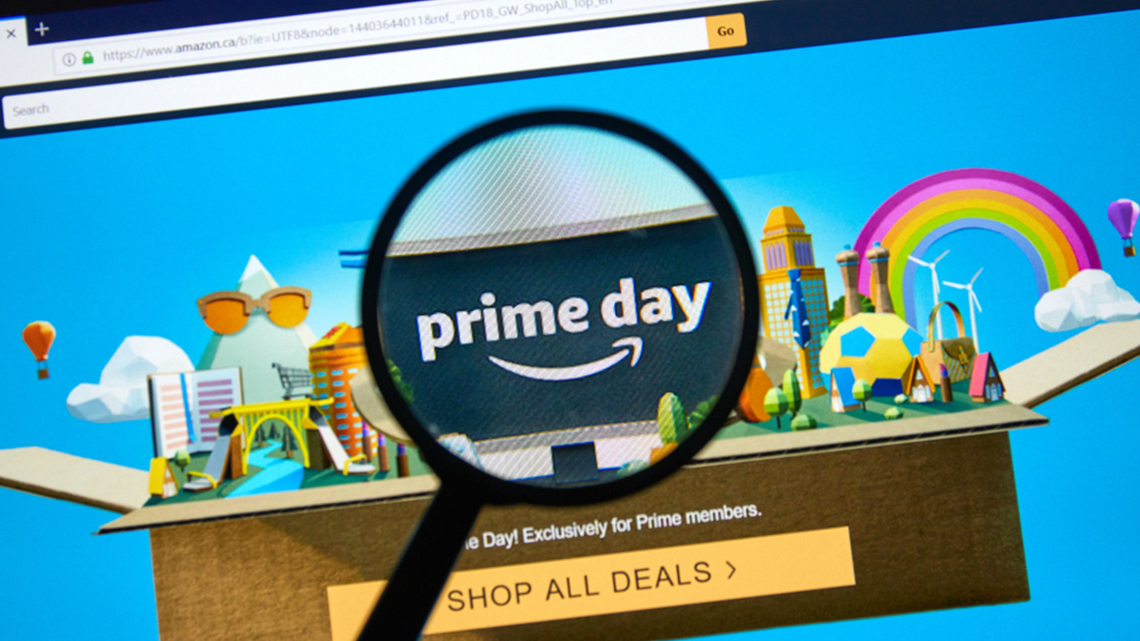
This Prime Day, consumers are growing to be practical.They are prioritizing necessities over indulgences, yet they are still spending more than expected.
Purchase data findings show that the average Prime Day 2022 spend per order is $53.14 compared to last year’s $47.14. So far, 42% of orders have been for $20 or less, while 13% have been for $100 or more.
Amazon has geared its attention toward attracting bargain hunters searching for affordable pantry stocks and low-priced electronics. A report from Numerator recorded last Tuesday that there was an increase of 20% in the typical household spending since the previous June sale. The best-seller in the early hours was a Frito-Lay variety pack of snack chips.
Furthermore, the report said that 83% of Prime Day buyers consider inflation as the primary variable affecting their purchasing behavior.
Yet there is another product category experiencing a profit increase.Branded items generate a big chunk of Amazon’s annual sales and have increased by 30% during Prime Day despite offering lesser discounts. It has outstripped the single-digit growth expectation.
Sellers experienced a sales surge hours after the launching of the event.According to Channel Key e-commerce consulting firm, their clients experience a 12% spike in sales in the first six hours of Prime Day compared to the previous year.
Takeaway: What probably made Amazon Prime Day 2022 a hit?Forbes reported on July 13, Thursday that aside from flooding consumers with organic and paid campaigns on social media, Amazon affiliate program appeared to be effective. Influencers and news outlets alike curate offers and goods in exchange for an affiliate commission on any sales made as a result of their promotion.
According to the Adobe Digital Price Index report, online grocery prices continue to increase despite inflation falling. In June, grocery prices rose by a record 12.4 percent year over year, setting a new high. This gain comes after earlier record-breaking year-over-year increases of 7.6% in February, 9% in March, 10.3% in April, and 11.34% in May.
As a consequence, e-commerce spending appears to be declining more in June ($74.1 billion) as compared to what was recorded in April ($77.8 billion) and May ($78.8 billion).
Adobe Commerce survey released recently revealed that 61% of consumers were waiting for Prime Day sales to avail of promos and deals. Some even plan to make their most significant purchases at this event. They say they would maintain their previous year’s expense limit or would spend more.
The first day of Amazon Prime Day revealed that inflation and the downward sloping economy will impact the sales this year. Americans spent $4.7 billion less in June than the previous month.
Takeaway: The ecommerce inflation has reshaped Amazon Prime Day, especially consumer behavior. Even though Prime members are willing to spend more than they spent last year, they are still willing to give up a good deal for the reason that the product is not a necessity.
FTI Consulting projects that in 2022, online retail sales will reach $1.07 trillion, surpassing its pre-pandemic prediction of 2025, partly due to growth brought on by the pandemic. Online retail sales outside the car and gas industries will reach 22.1 percent by 2022, up from 20.8 percent in 2021 and 15.2 percent in 2019.
The report further says that e-commerce sales will reach $2 trillion by 2030 and account for 31% of total sales by the decade’s end.
According to a 2021 Forester report, even though eCommerce has already established its pillars in the retail industry, physical stores remain significant, and three-fourths of the retail sales in the US will still occur in person.
A poll of international retail leaders Ipsos for Publicis Sapient and Salesforce found that 44 percent of online-only merchants were not profitable, compared to 20 percent of brick-and-mortar stores that reported the same. Operating an online-only business is still difficult.
Takeaway: Online shopping in this past 2 years was driven by necessity due to Covid-19 restrictions. FTI Consulting said that ecommerce spending in the 2nd half of 2022 will modulate as the pandemic cools down and the inflation rises.
I’m building out the 7 Figure Seller Summit 7 and would love it if you could spend 5 min to fill out this short survey so I can learn about your challenges and goals for the remainder of 2022.
I would appreciate your honest feedback as this will help us create the best Amazon conference for you!
Have you checked out our Youtube channel yet? For the first half of the year, we were able to invite awesome guests and experts who have shared a lot of tips and value.
Here is the list of top 5 videos on the 7FSS Youtube channel for this year:
Gary invited Marc Jepsen from ManageByStats to share how you can know your actual profits so you can SCALE and prevent your sales from decreasing over time. This conversation has helped sellers know their numbers as they run their Amazon business,
In this video, Gary discussed one-by-one his key takeaways after he interviewed 153 – 7 figure sellers and ecom experts after hosting the 7 Figure Seller Summit – an online event that was voted favorite amazon conference two years in a row in seller poll.
Don Henig from AccrueMe provided valuable training on scaling an Amazon FBA Business from $144K to $1M: Best Practices in Capital, Cashflow, and Funding. Important points such as the biggest mistake made by sellers when scaling, vital factor in financing your growth, and establishing a company vision were tackled.
In this live webinar, Gary unraveled the 3 pillars of profitability. Each pillar aims to assist sellers in how to offset high shipping costs, warehouse costs, and rising material costs; have more budget to spend on PPC to beat your competitors; increase your bottom line EBITDA and maximize a potential exit; and maximize business strength in 2022 as the competition increases.
This live Masterclass with Margaret Jolly and Meghla Bhardwaj, Co-Founders of India Sourcing Network, shared strategies for negotiating with Indian manufacturers to learn. They also touch down on proven negotiation strategies, negotiating timing, other things to deal with apart from price, cultural sensitivities, and common mistakes to avoid that could cost you time and money.
Meet Gary Huang, the creator of the AI for Amazon Sellers 28 Day Challenge and the founder of the 7 Figure Seller Summit. Gary's journey in the ecommerce world began in 2005, when he launched his first private label brand selling women’s shoes on eBay. Since then, he has steadily grown a portfolio of ecommerce brands on platforms like Amazon and Shopify, serving customers in marketplaces across the globe.
But Gary's experience isn't limited to just ecommerce. With a decade of corporate experience under his belt, he has managed supply chains in Shanghai, China, overseeing multimillion-dollar sourcing campaigns. This broad range of knowledge has provided him with a unique perspective on the ecommerce industry, which he now shares with others through his various initiatives.
He is a highly regarded figure in the ecommerce space, with his strategic insights and innovative approaches widely recognized in prominent media outlets including Forbes, NPR, and Bloomberg.
Recently Gary’s fascination with AI came from a simple observation: AI was changing everything, everywhere, all at once. This impact is affecting everything from education, politics, the arts, to ecommerce businesses.
This led him to spend hundreds of hours testing AI applications in his own business and interviewing other successful Amazon sellers and ecommerce experts at the AI and ChatGPT Summit for Amazon sellers.
His aim was to find out how AI could be used to grow ecommerce businesses, save time, and increase profitability. The insights he gained have played a crucial role in shaping the AI for Amazon Sellers 28 Day Challenge.
Outside of his own ventures, Gary has shared his expertise on platforms like the Helium 10 podcast, Jungle Scout's Million Dollar Case Study, Webretailer.com, and the Global Sources Summit. His understanding of global trade was even acknowledged when he served as the Chair of the American Chamber of Commerce in Shanghai's Supply Chain Committee, briefing White House Congressional officials on US-China trade and supply chain strategies.
Despite a career that has taken him around the world, from his native Los Angeles to Shanghai and now Japan, Gary remains down-to-earth, focusing on his role as a husband and father. His experiences, both personal and professional, inform his approach to business and the advice he shares through the 28 Day Challenge.
I don’t think the title of your article matches the content lol. Just kidding, mainly because I had some doubts after reading the article. https://www.binance.com/register?ref=QCGZMHR6
Thank you for your sharing. I am worried that I lack creative ideas. It is your article that makes me full of hope. Thank you. But, I have a question, can you help me?