
The 6 Bridges to sell on Amazon Japan
The obstacle is the way – how to overcome your biggest challenges selling in Japan Date: 2/2/24 11pm JST
Hi Everyone,
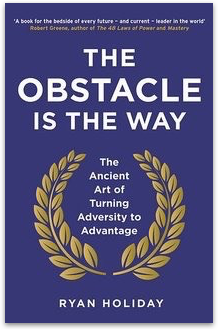
“The Obstacle is the Way” is a book by Ryan Holiday which perfectly summarizes the journey to selling on Amazon Japan.
Selling on Japan can be intimidating – in a recent survey where I polled over 130 sellers interested in selling on Amazon Japan what was their #1 challenge – here’s what you told me.
- Language barrier
- No understanding of what is involved
- Total ignorance of the marketplace
- The steps setting up my seller central
- Opening an account (not just Amazon Global Listing)
- Having the FBA there with the stock in the country
- Legislation rules of entering are not transparent
- PPC Ads of course is an obstacle because of language
- Traditional marketing does not work
- Regulations (Importer of record)
- Proper listing translations
- Food Import Requirements
- And more
It’s easy to view these challenges as obstacles, but in reality they can be some of our greatest strengths.
Take for example Chris Davey, 7 Figure Seller who sells on Amazon EU, who explains that all of the European VAT, compliance, and bureaucracy that he has to deal with selling on Amazon EU are in fact a MOAT against his competitors.
He sees these challenges as benefits to actually prevent his competitors from entering this market.
Since Chris has found the way to turn these adversities into advantages, he is enjoying the results of this and is thriving in the Amazon EU marketplace as a result.
Coming back to Japan, these challenges are all surmountable.. Even if you don’t speak the language (like me).
So I’ve distilled these challenges you’ve shared into the “6 Bridges of Amazon Japan”.
These are the 6 bridges that sellers must cross in order to sell into Japan.
Bridge 1: Product-Market Fit: Will my product sell in Japan?
“What are the niches that best suit this marketplace?”
“How can I verify the demand for my designs in Japan (culturally?)”
This is the million dollar question.
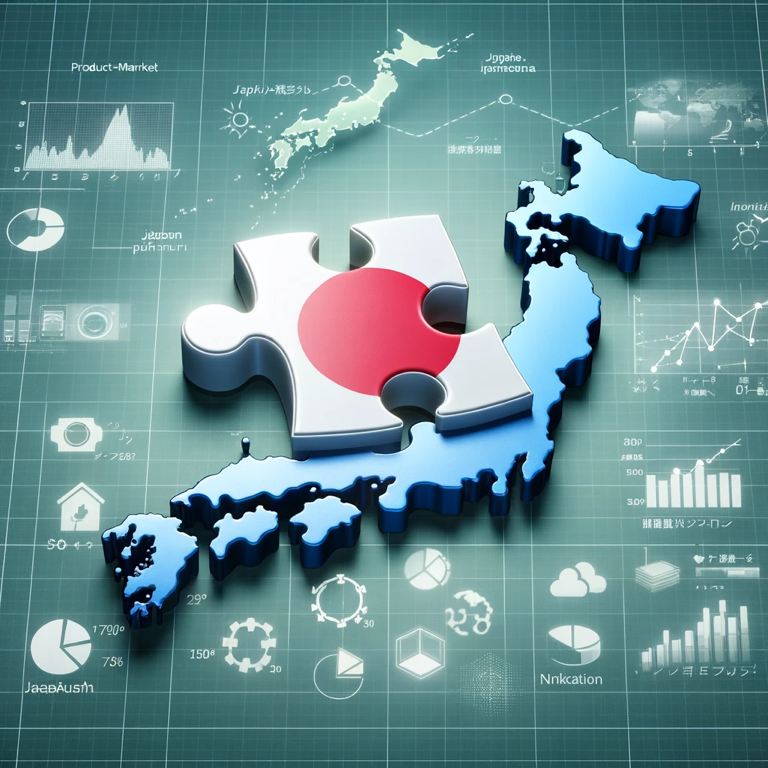
To answer that you need to gauge 4 key variables
Market Size – Amazon Product Opportunity Explorer
This is a tool from Amazon that will help you size up how big the market for your product is in Japan.
Best of all, this data is directly from Amazon so you can trust it is 100% accurate.
Keyword Search Volume – Helium 10, Jungle Scout, and Data Dive all support Amazon Japan.
You can use them in a similar way as you do for keyword research in the Amazon US or EU marketplaces.
Competition – Amazon.co.jp
First some good news – Amazon.co.jp has an ENGLISH language setting. Simply set it to English and you can get all of the Japanese product listings translated to English.
It is not 100% but it is more than enough for our research purposes right now.
So do a simple search on Amazon.co.jp and you will find out which of your competitors are already selling in Japan.
You may be pleasantly surprised that most of them are not there yet = BIG OPPORTUNITY
Culture
But perhaps my favorite tool to learn about the Japanese marketplace and how my product may be used is YOUTUBE

“Idiot’s guide to Japanese Kitchens” Source: Youtube
If you sell a kitchen product, you can “walk through” a Japanese kitchen by searching for “japanese kitchen walkthrough” on Youtube.
This will help you visualize and better understand how Japanese people use your product (or if they use it at all).
By following the steps and the tools above you can get a better idea of product-market fit for your product in Japan and whether your product will sell in Japan.
Bridge 2: Japanification – localization
There are 4 key things that Japanese shoppers pay attention to when shopping online according to Ritu Java, who is a Japan localization and PPC expert who has lived in Japan for 17 years.
1) Language
2) Aesthetics
3) Details – Focus on Data
4) Culture
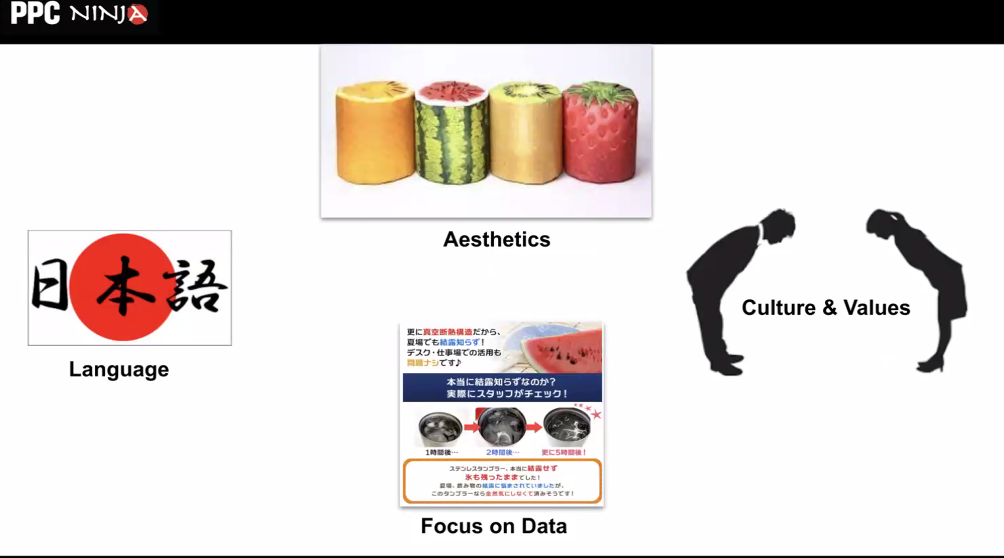
These are the 4 levers to pull when localizing your product to Japan.
All of them can be done by sellers who don’t speak Japanese.
Language
I’ll be honest – Japanese is a tough language. There are 4 scripts that are used in various situations.
The best way is to hire a native speaker that has Amazon copywriting experience to help you translate.
The quick way is to use ChatGPT. It is miles ahead of Google translate and can help generate a draft of your product listing translation into Japanese.
But I recommend you hire a native Japanese speaker to check and polish it before going live with the listing.
In terms of actually selling in Japan however, the good news is that Amazon Japan Seller Central can be set to ENGLISH.
This means if you’re already familiar with US or EU seller central – you will feel right at home setting up to sell in Amazon Japan.
Aesthetics – Japanese people love to beautify the packaging.
Take for example the art of gift giving in Japan. If you go to a Japanese department store, the basement level will have a whole floor dedicated to selling sweets.
When you buy a box of sweets, the staff will elaborately gift wrap it as if you were a King or Queen.
That is the level of aesthetics Japanese people expect.
Details and Data
Japanese people love details. Take for example a box of wet wipes.
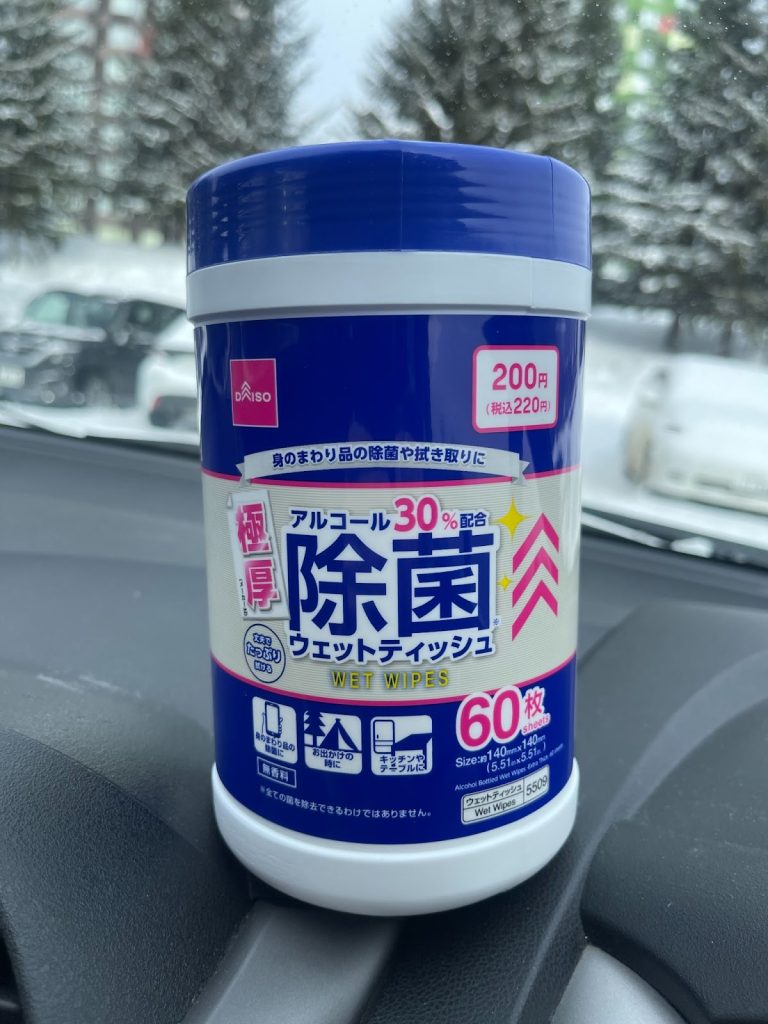
You can see the level of details on this box with
- Alcohol content
- Size
- Thickness
- Exact uses (Devices, outdoors, kitchen, etc)
- The number of wipes
- And much more detail that most Americans would expect for a simple pack of wet wipes
This is all to build trust in the shopper’s mind and increase the chance of the sale.
Culture and Respect
The language and tone of the copywriting must be more polite than your usual copywriting for the US market.
A big “no no” is to say that you are a small family business and to thank them for the purchase.
That is not culturally appropriate in Japan!
Bridge 3: Import and Compliance
“Are there any limitations on what type of products can be sold and are there ways around the limitations?”
Japan has complicated import and compliance laws – but the good news it this is easily surmountable if you find the right agency that can help guide you through the forest of Japanese import laws and regulations.
One example is with a kitchen product that I used to sell in the US market.
Several years ago I considered selling this into Japan and I did the keyword research and ran the numbers.
I got excited because none of my competitors were selling in Japan.
This could have been a wide open market.
However I emailed an import compliance company and they recommended NOT to import this product to Japan.
I found out that one of the components used for this product was illegal in Japan for the general public. It could only be sold to professional restaurants and cafes.
Fortunately I spoke with a Japanese import/compliance agency which saved me a ton of headaches down the line.
Bridge 4: Shipping, Logistics, and 3PL
This challenge is actually a big benefit because Japan is in the same region as your Asian suppliers.
Japan is next to China, not far from India, Vietnam, and Thailand.
This means that you will save time and money shipping your product from your factory to the Amazon Japan fulfillment center.
We are talking about only 7-10 days versus 30-45 days or more.
Also shipping costs will be significantly lower.
If you are a 7 or 8 Figure Seller this should be a light bulb moment because this can free up your cash flow so you can have less money tied up in product inventory since you can turn your orders faster.
In other words rather than keeping 3-4 months of inventory in stock you can effectively shave that in half depending on your inventory management.
Another big benefit is that there is no US-China Trade war in Japan.
Therefore you will shave off 25% or more tariffs from your landed costs.
Also Japan has many free trade agreements with India, Thailand, Vietnam, and over a dozen other countries across the world.
This means you will lower your landed costs more.
That can instantly help improve your margins and profitability compared to sourcing from China and selling in the US or EU.
The key takeaway is that selling in Japan will be a logistical and cash flow ADVANTAGE to your business once you calculate the costs.
Bridge 5: Launch Strategy
Every seller wants to launch their product with a BANG.
The goal is to take advantage of the “honeymoon period” when your product first launches to lock up a high ranking on page 1 of your search results on Amazon.
If you are already selling on Amazon US or EU or any other marketplace – good news.
You can CARRY over your reviews from Amazon US/EU/other markets to Amazon Japan.
This means if you have 700 reviews on Amazon.com (US) you can launch with 700 reviews on Amazon Japan from Day 1.
One other advantage to the lower competition on Amazon Japan is that the review threshold is lower.
As we saw earlier this week, the best selling “thick yoga mat” in Japan only has a 3.9 star rating with 373 reviews.
The US best seller has 4.6 stars and over 70,000 reviews.
This means that if your review count was in the middle of the pack on Amazon.com, you could potentially be leading the pack on Amazon Japan.
You can instantly have social proof with your reviews to build trust for Japanese shoppers and increase your conversion rates and sales.
Bridge 6: Marketing and Advertising optimization.
Once you have your listing localized and selling the next step is to pour fuel on the fire with marketing and advertising.
In terms of Amazon PPC, there are many new promotions added in 2024 and you will get even more rich data from Amazon.
And the good news is that Amazon PPC costs in Japan are lower than Amazon US and EU on average.
So you will likely get better ROI from your PPC ad spend.
In addition, Japan has a “follow the crowd” mentality.
This means that Japanese influencers are a great way to make your product go viral and skyrocket your sales.
In terms of social media, the #1 social media app is Line with a 82.5% penetration rate.
7 Figure Japan seller Nick Katz says that he builds a list of his customers on Line.
And every time there’s a holiday in Japan, he sends a message out on friday and sunday.
And he literally crashes his web server every time he does that (for non Amazon sales) because shoppers are expecting sales around holidays.
These are great ways that you can scale your business through marketing on Amazon Japan.
These are the 6 Bridges to Selling in Japan.
Remember the Obstacle is the Way – by doing the work and selling on Japan the right way, you will be able to build a defensible moat around your business as you expand into a new marketplace in 2024.
Bonus: I will give a 40 min training on the 6 Bridges to Selling on Amazon Japan in further detail at the “Convert More Clicks Summit” online conference on Feb 8th.
There is a small registration fee and I feel if you got value from this, it definitely will help you more as I cover the 6 bridges in greater depth and with more visual examples.
https://www.dropbox.com/scl/fo/zziufkqv7dku7cum2ibyy/h?rlkey=g5big9ovu51tsemfo6shf0ssi&dl=0
I put a lot of time and effort into making this an A+ training for you. If you feel it adds value, I would appreciate it if you would vote for me for the “Most Valuable Presentation”.
Thank you.
Gary
PS: If this was helpful and you are serious about selling on Amazon Japan – I’d like to invite you to join me and 7 and 8 Figure Amazon Japan sellers at the 7 Figure Japan Mastermind in Okinawa Japan Apr 8-10, 2024. Learn more here: https://7figuresellerjapanmastermind.com/
About the Author sevenfiguresel
Meet Gary Huang, the creator of the AI for Amazon Sellers 28 Day Challenge and the founder of the 7 Figure Seller Summit. Gary's journey in the ecommerce world began in 2005, when he launched his first private label brand selling women’s shoes on eBay. Since then, he has steadily grown a portfolio of ecommerce brands on platforms like Amazon and Shopify, serving customers in marketplaces across the globe.
But Gary's experience isn't limited to just ecommerce. With a decade of corporate experience under his belt, he has managed supply chains in Shanghai, China, overseeing multimillion-dollar sourcing campaigns. This broad range of knowledge has provided him with a unique perspective on the ecommerce industry, which he now shares with others through his various initiatives.
He is a highly regarded figure in the ecommerce space, with his strategic insights and innovative approaches widely recognized in prominent media outlets including Forbes, NPR, and Bloomberg.
Recently Gary’s fascination with AI came from a simple observation: AI was changing everything, everywhere, all at once. This impact is affecting everything from education, politics, the arts, to ecommerce businesses.
This led him to spend hundreds of hours testing AI applications in his own business and interviewing other successful Amazon sellers and ecommerce experts at the AI and ChatGPT Summit for Amazon sellers.
His aim was to find out how AI could be used to grow ecommerce businesses, save time, and increase profitability. The insights he gained have played a crucial role in shaping the AI for Amazon Sellers 28 Day Challenge.
Outside of his own ventures, Gary has shared his expertise on platforms like the Helium 10 podcast, Jungle Scout's Million Dollar Case Study, Webretailer.com, and the Global Sources Summit. His understanding of global trade was even acknowledged when he served as the Chair of the American Chamber of Commerce in Shanghai's Supply Chain Committee, briefing White House Congressional officials on US-China trade and supply chain strategies.
Despite a career that has taken him around the world, from his native Los Angeles to Shanghai and now Japan, Gary remains down-to-earth, focusing on his role as a husband and father. His experiences, both personal and professional, inform his approach to business and the advice he shares through the 28 Day Challenge.