
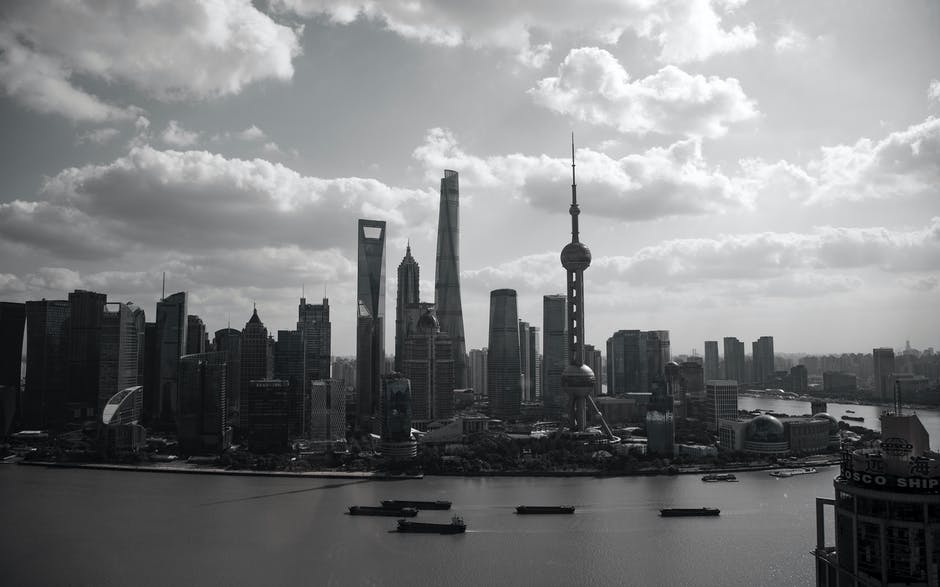

While some parts of China are returning to standards, like Shenzhen and Shandong province, Shanghai is still experiencing a severe sustained lockdown. There are mixed reports on whether Shanghai ports and logistics are operating as usual.
The status is changing day by day, if not hour by hour. My main recommendation is to work with your suppliers and freight forwarders to get the latest information on how to minimize the disruption.
In terms of civilian life in Shanghai, many families are stuck at home. Going out to walk their dogs in their apartment complexes seems impossible. Meat and seafood are in short supply. So, it is a very chaotic time. As to when the lockdown in Shanghai will end, nobody knows for sure. Some people suspect that it may last until the end of the month.
Trucks are still able to enter Shanghai despite the lockdown. However, several local governments in other places refused to allow Shanghai truck drivers to pick up products. A shift to FOB Ningbo, 250 kilometers from Shanghai, might be preferable.
Takeaway:
Amazon sellers should strategically plan on their restocking and inventory to avoid taking a loss due to delays. To avoid interruptions caused by the pandemic, continue monitoring and engaging with your suppliers.
Economists at Goldman Sachs, an investment management firm, have seen three effective solutions for companies in the U.S to strengthen the supply chain — reshoring foreign production, diversifying supplier networks, and overstocking inventories.
However, between reshoring and overstocking strategies, the latter is used by those offering durable goods. According to the survey, companies studied by Goldman Sachs are striving for inventory-to-sales ratios that are on average 5% greater than before the pandemic. At the same time, reshoring appears to be limited.
The analysts also discovered that businesses that rely heavily on suppliers from countries with more substantial virus restrictions would have lower revenue growth in 2020. In 2021, those businesses were more likely to diversify their supply base. To quote Goldman Sachs economists, they wrote “Greater supply chain resilience comes at a price, and some investors worry that these trends will add to inflationary pressures,”
Takeaway:
As an Amazon seller, proper inventory management is vital to stay ahead of competition especially amidst the disruptions in the supply chain. Taking the time and effort to weigh your options between reshoring foreign production, diversifying supplier networks, and overstocking inventories should be your priority to combat delays. See what works best for your business and implement it strategically.
Be efficient and ensure that you have the necessary supplies on hand to be on top of the game.
Increased activity in online shopping has been the reason for the liquidation of stores like Quick Pick and Krazy Binz to come up.
They sell overstock and returned items from giant retailers like Amazon for a lower price.
Recently, liquidation stores have been opened in Ottawa. Gilles LeVasseur, a University of Ottawa business and management professor, believes that more similar stores will come to Ottawa due to its proximity to the Amazon warehouse.
He explained that the liquidation stores are paid a percentage of the sales. “That’s the beauty of the system for Amazon,” LeVasseur explained, “They can liquidate and have quick growth of genuine additional things that they were not able to sell.”
Takeaway:
Returns and surplus inventory have become unavoidable as online shopping has gained popularity. FBA liquidations assist FBA sellers in recouping the value of their products. Sellers can also avoid paying Amazon warehouse storage costs for old inventory. In a word, the FBA liquidation program is a cost-effective and lucrative way to get rid of unsold and returned merchandise.
How to Scale from $144k to $1m with the right strategies?
Don Henig from AccrueMe just provided valuable training on the best practices of how successful sellers are scaling from $144k to $1m in 2022. In this special training, he enumerated the different ways you can scale your business to 7 figures with the right strategies, right partners and significant effort.
Meet Gary Huang, the creator of the AI for Amazon Sellers 28 Day Challenge and the founder of the 7 Figure Seller Summit. Gary's journey in the ecommerce world began in 2005, when he launched his first private label brand selling women’s shoes on eBay. Since then, he has steadily grown a portfolio of ecommerce brands on platforms like Amazon and Shopify, serving customers in marketplaces across the globe.
But Gary's experience isn't limited to just ecommerce. With a decade of corporate experience under his belt, he has managed supply chains in Shanghai, China, overseeing multimillion-dollar sourcing campaigns. This broad range of knowledge has provided him with a unique perspective on the ecommerce industry, which he now shares with others through his various initiatives.
He is a highly regarded figure in the ecommerce space, with his strategic insights and innovative approaches widely recognized in prominent media outlets including Forbes, NPR, and Bloomberg.
Recently Gary’s fascination with AI came from a simple observation: AI was changing everything, everywhere, all at once. This impact is affecting everything from education, politics, the arts, to ecommerce businesses.
This led him to spend hundreds of hours testing AI applications in his own business and interviewing other successful Amazon sellers and ecommerce experts at the AI and ChatGPT Summit for Amazon sellers.
His aim was to find out how AI could be used to grow ecommerce businesses, save time, and increase profitability. The insights he gained have played a crucial role in shaping the AI for Amazon Sellers 28 Day Challenge.
Outside of his own ventures, Gary has shared his expertise on platforms like the Helium 10 podcast, Jungle Scout's Million Dollar Case Study, Webretailer.com, and the Global Sources Summit. His understanding of global trade was even acknowledged when he served as the Chair of the American Chamber of Commerce in Shanghai's Supply Chain Committee, briefing White House Congressional officials on US-China trade and supply chain strategies.
Despite a career that has taken him around the world, from his native Los Angeles to Shanghai and now Japan, Gary remains down-to-earth, focusing on his role as a husband and father. His experiences, both personal and professional, inform his approach to business and the advice he shares through the 28 Day Challenge.
Thank you for your sharing. I am worried that I lack creative ideas. It is your article that makes me full of hope. Thank you. But, I have a question, can you help me?